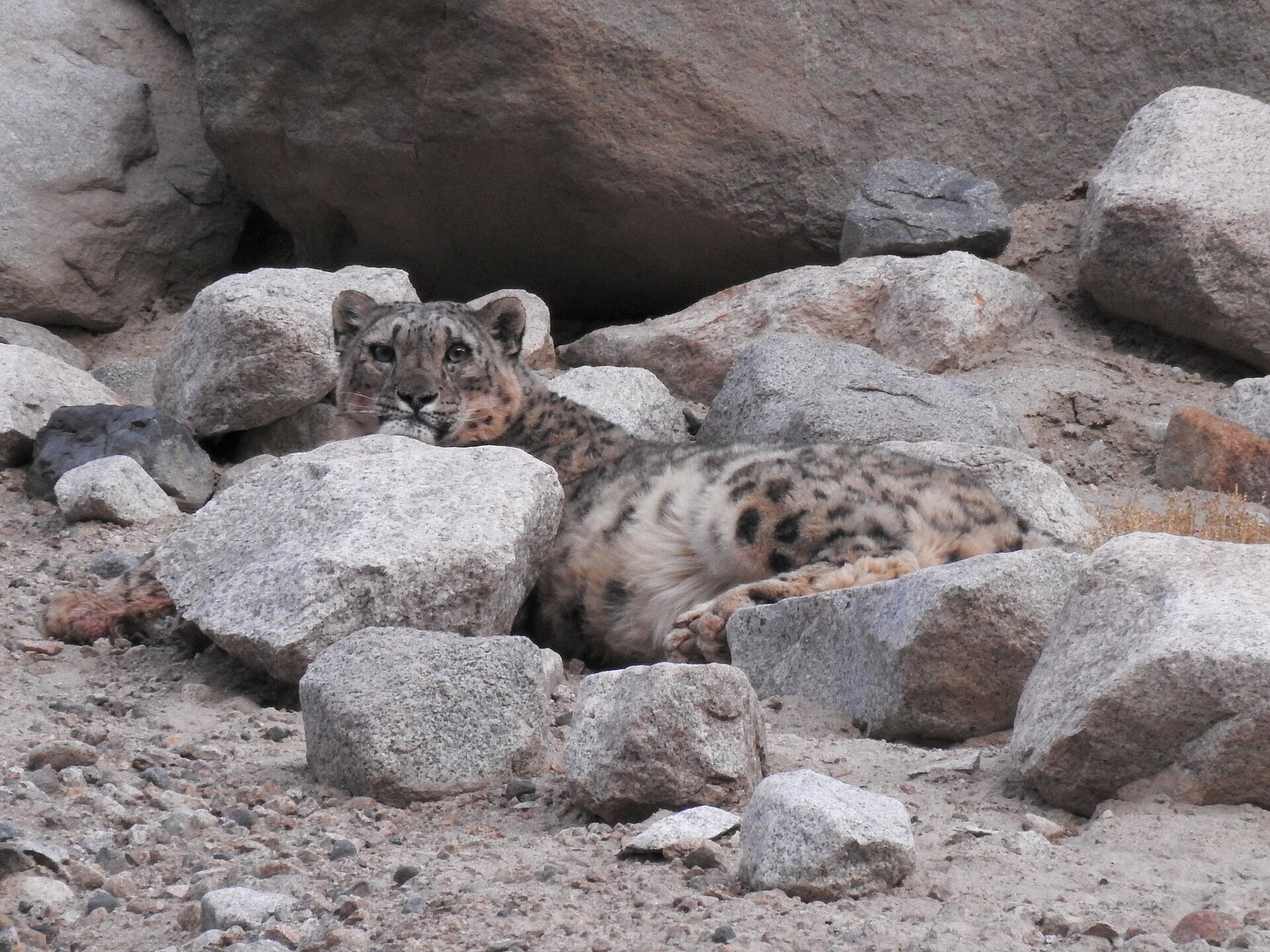
First, the honest premise: you will not find a snow leopard. The Ladakhi spotting teams will, reading slopes through telescopes for ten hours a day with an ability that borders on the supernatural, and your job is to be nearby, warm enough, and quick to the scope when the radio crackles. Accept that division of labour and the trip makes perfect sense.
The shape of the week
Fly Delhi to Leh, then spend two full days doing almost nothing, the airport sits at 3,500 metres and acclimatisation is the only non-negotiable in this itinerary. Day three, drive forty minutes to the Zingchen gate and walk or jeep into the Rumbak area, the park's winter theatre: a handful of side valleys where blue sheep descend in cold months and leopards patrol after them. Base is a village homestay or heated camp for five to seven nights. That length is not padding, sighting probability is roughly linear in scope-days.
A day at the watch
06:30, spotters leave in the dark for vantage points. 08:00, you follow after breakfast to the nearest ridge or valley-mouth station, where the telescopes are already sweeping. The middle hours are the trip's true texture: scanning, butter tea from thermoses, bharal counted, griffon vultures logged, toes wiggled. Late afternoon, second activity peak as the light goes amber. Dusk, back to the bukhari stove, data shared between teams by radio and WhatsApp. Most days produce signs, tracks, scrapes, a kill site, and bharal drama. Then one day, usually mid-trip, the radio changes tone.
A spotter fixes on a grey fold of rock that is suddenly an animal; scopes converge; someone jogs, slowly, altitude, to fetch the guests. Through the eyepiece: a leopard on a ledge four hundred metres away, doing mostly nothing, magnificently. Sightings last minutes to hours; the cat sets the schedule. Binoculars show you a rumor, the telescope shows you the ghost's face.
The odds, stated plainly
In the late-January to mid-March window, week-long trips with good local teams see leopards on a strong majority of departures, recent seasons have been generous, with some operators running near-streaks. But "majority" is not "all": people do go home with tracks and bharal and no cat. Book more days rather than fewer, treat the sighting as probable rather than promised, and remember that the valley's wolves, urial, ibex and lammergeiers are not consolation prizes, they are the rest of a functioning high-altitude ecosystem, which is the thing you actually came to stand inside.
Cold, kit and body management
Expect 0°C in the sun, -15°C and lower at night, and long stationary hours in shade, the exact opposite of trekking warmth. The kit that matters: expedition down jacket, insulated boots with room for thick socks, down pants or fleece-lined shells, chemical warmers by the box, a thermos, and dark glasses for snow glare. Altitude rules continue all week: hydrate absurdly, walk slowly, report headaches. The homestay stove dries boots and restores morale on the same schedule.
Money and where it goes
Budget US$150-300 per day for homestay-based trips with Leh operators (guides, spotters, park fees, food, transfers), more for camps and lodges with photography infrastructure. The glad news is the destination of the money: homestay fees, spotter wages and livestock-insurance schemes have flipped the local calculus, and the leopard that once cost a village its goats now pays for school fees. Choosing a local operator with named spotters is both the ethical pick and, not coincidentally, the one with the best eyes.
The ethics of the scope
The system works because it is long-lens by design: cats observed across valleys, never approached, baited or tracked on foot. Follow the team's distance discipline, keep voices low at stations, skip drone fantasies entirely, and let the spotters decide what the animal's behaviour allows. The Hemis model is wildlife tourism's rare good-news story, arrive as a participant in it, not a test of it.
The checklist
6-12 months out: book the window and operator. 3 months: Delhi-Leh flights (morning ones), insurance with altitude cover. 1 month: down everything, boots broken in, warmers bought. On site: two lazy Leh days, then five-plus scope days, then the feast. Souvenir: a memory card with four hundred bharal photos and, probably, probably, the ghost.