The Hemis festival is the reason most visitors first hear the park's name at all. It is a two-day cycle of masked cham dances held in the courtyard of Hemis Monastery, roughly 45 kilometres southeast of Leh, usually falling in June or early July. The dates move each year because they follow the Tibetan lunar calendar, tied to the birth anniversary of Guru Padmasambhava, and they are set by the monastery itself, not by a tourism board. Anyone building a trip around it needs to treat the date as a moving target until the monastery or the Jammu and Kashmir tourism department confirms it, usually a few months ahead.
When the festival actually falls
In recent years the festival has landed anywhere between mid-June and mid-July. It is calculated on the tenth and eleventh days of the fifth month of the Tibetan calendar, which does not map neatly onto the Gregorian one. Do not trust a date you find on a general India-travel site from two years ago: cross-check it against the current year's announcement, which usually appears by February or March. If you are building a Ladakh itinerary around this single event, lock the festival date first and build travel and acclimatisation days around it, not the other way round.
What the cham dances show
The dances are performed by monks in heavy brocade robes and painted wooden masks representing wrathful and protective deities, guardians, skeletons, and animal-headed figures. The sequence tells a story of the triumph of Buddhist teaching over obstructing forces, built around the Padmasambhava legend. Movements are slow and circular, accompanied by long horns, cymbals, and drums played from the upper gallery. Every twelfth year (the Monkey year in the Tibetan zodiac, next due in 2028) a large thangka and a sacred mask associated with Guru Padmasambhava are displayed, drawing a noticeably larger crowd than the standard annual cycle.
Getting a decent view of the courtyard
The courtyard at Hemis is not large, and on festival days it fills from mid-morning. Monks and invited guests take the shaded colonnade seating; general visitors stand or sit along the perimeter, often two or three rows deep by the time the first dance begins. Arrive by 8am if you want a clear sightline at ground level, earlier if you plan to shoot photos without bodies in frame. A low stool or folding seat is worth carrying since the ground is stone and the standing crowd rarely moves. Entry to the courtyard is free; a modest camera fee is sometimes charged at the gate, generally a few hundred rupees, and this can change year to year.
Confirm the exact festival dates with the monastery or Leh's tourism office in the months before travel. The dance schedule for each day (morning and afternoon sessions, breaks) is posted at the gompa itself on the day; do not assume a fixed start time from previous years.
Where to stay and how to get there
Hemis village has limited guesthouse capacity, and it is overwhelmed during the festival. Most visitors base themselves in Leh, roughly 90 minutes by road, and travel out early by taxi or shared transport, since the monastery's own parking area fills quickly. If you would rather sleep closer to the park and skip the pre-dawn drive, it is worth booking well ahead; festival dates sell out local rooms weeks in advance, not days.
Combining the festival with park time
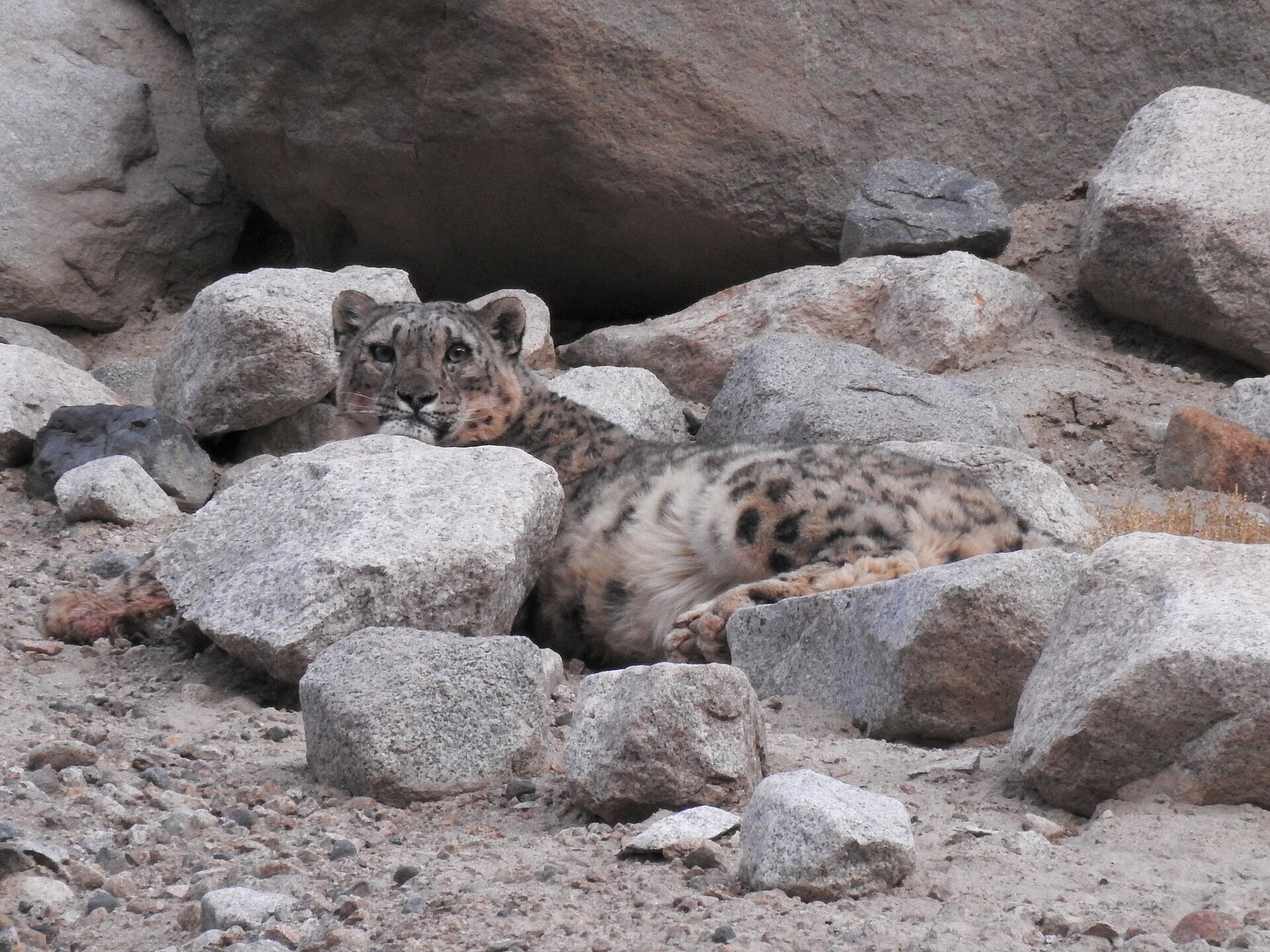
The festival itself sits outside the snow leopard tracking season, which runs roughly from late December through March, so do not expect wildlife activity to overlap with the dances. What the June and July dates do align with is the park's greener, more accessible shoulder season: trails into the Rumbak and Markha side valleys are open, streams are manageable, and the Ladakhi guiding teams who lead winter leopard treks are often free to arrange shorter day walks or monastery-focused itineraries around the festival window. Asking locally in Leh or at Hemis village about a half-day walk before or after the dances is a reasonable way to use the trip beyond the courtyard.
Practical notes for the day
Altitude at Hemis sits above 3,500 metres, so the usual Ladakh advice applies: spend two to three days acclimatising in Leh before the festival if you have flown in directly. Bring sun protection and a layer for wind even in midsummer, since the courtyard has little shade past late morning. Water and basic snacks are sold near the gate at ordinary village prices; there is no need to carry much beyond a bottle and a hat. Photography is generally welcome from the designated visitor areas, though flash and movement into the dance space itself are not.