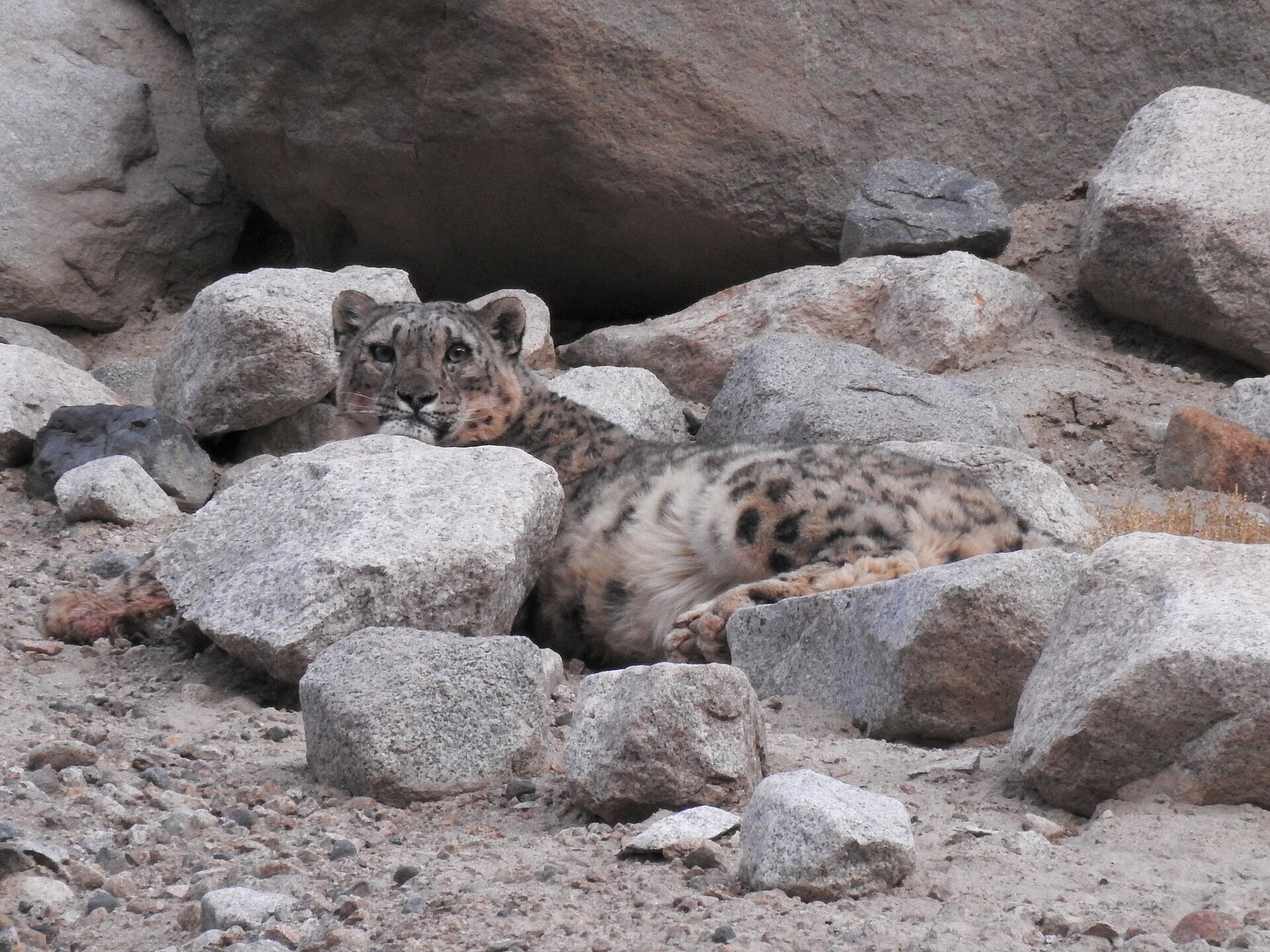
Hemis National Park begins roughly 15 to 20 km south of Leh as the crow flies, but the practical gateway, the village of Zingchen, is about 2 to 2.5 hours away by road once you count the drive and the final stretch on a dirt track. Most visitors are not heading to the Hemis monastery itself (that is a separate, paved detour) but into the park's interior, toward Rumbak, Husing or the Markha Valley side, where the wildlife tracking actually happens. Understanding the difference between "Hemis the monastery" and "Hemis the park" saves a lot of confusion when you are booking a taxi.
Road distance and the two different destinations
Leh to Hemis Monastery is about 45 km on a sealed road, roughly 1 to 1.5 hours by car, and sees regular tourist traffic, especially during the masked cham dances at the namesake gompa. Leh to Zingchen, the main entry point for the national park and the snow leopard circuit, is a shorter distance on the map (around 17 km) but a slower drive: you leave the Srinagar-Leh highway near Spituk, follow the Indus for a stretch, then turn up the Zingchen nullah on an unpaved road that narrows considerably in winter. Allow 45 minutes to an hour from Leh to Zingchen in good conditions, more if the track is icy or washed out after rain.
Shared taxis, private hire and the absence of public buses
There is no scheduled public bus service into the park itself. Shared jeeps and minivans occasionally run from Leh toward Zingchen during peak season (roughly November to March for snow leopard tracking, and the summer trekking months for Markha Valley access), but schedules are informal and depend on demand from other travellers that day. Most visitors arrange a private taxi through the Leh taxi union counter or through their homestay or guide outfit. Expect to pay somewhere in the range of 2,000 to 3,500 INR for a return trip to Zingchen with waiting time, though rates shift with fuel prices and season, so check the day's posted union rates rather than relying on a figure quoted online.
Permits and the checkpoint you will pass
Hemis National Park requires an entry permit, checked either at a forest department post near the park boundary or retrospectively if you are travelling with a registered guide. Carrying a printed or digital copy of your permit is worth the five minutes it takes, since checkpoint staff do stop vehicles during the main season. The full breakdown of fees, camera charges and how foreign versus domestic rates differ is covered in the park's entry fees and permits price guide, which is worth reading before you arrange transport, since some taxi drivers expect you to already have paperwork sorted.
The Zingchen track is the main bottleneck, not the highway. It can ice over overnight in December and January, and a two-wheel-drive taxi may refuse the last kilometre. Confirm with your driver in advance whether the vehicle is rated for the final stretch, or be ready to walk the last 15 to 20 minutes.
From Zingchen into the park: what happens after the road ends
Zingchen is not the park interior, it is the trailhead. From here, Rumbak village is a walk of about 2.5 to 3 hours along a riverbed trail, gaining roughly 300 to 400 m in elevation. This is the walk that most snow leopard trips use to access spotting territory, and it is also the first leg of the broader Markha Valley trek route guide for those continuing further. There is no vehicle access beyond Zingchen in winter, so pack accordingly: daypack, water, and layers for a walk that starts at an altitude where most people are still adjusting.
Altitude and why the short distance still needs a buffer day
Leh sits at about 3,500 m, and Zingchen and Rumbak are higher still, pushing past 3,800 m before any walking begins. The short driving distance from Leh is misleading if you arrive straight from a lower-altitude flight and head out the same day. Most experienced operators, and the Ladakhi spotting teams who actually do this work daily, recommend at least one full rest day in Leh before heading into the park. The reasoning and a practical two-day plan are laid out in 48 hours in Leh, the acclimatisation that saves your trip, which is more useful reading than any transport timetable if this is your first visit to Ladakh.
Timing your departure around the season
In winter (December to February), roads are driveable but slower, daylight is short (sunrise around 7:30 am, sunset by 5:30 pm), and most groups leave Leh by 6 or 7 am to maximise usable light for tracking near Rumbak. In the warmer trekking months (June to September), the Zingchen road is easier but mornings are still the preferred departure window to avoid afternoon haze and to reach camp or homestay before dark. Whichever season, confirm your pickup time the night before with whoever is driving you, since early starts are standard practice here, not an inconvenience.
Where to stay changes how you travel
Basing yourself in Leh means a daily round trip to the park entrance; basing yourself in Rumbak or a village further in cuts that commute but trades it for fewer amenities and a rougher final approach. Both have trade-offs covered in detail in where to stay for snow leopards: Leh, Rumbak or Ulley compared, which is worth reading before you book transport, since your accommodation choice effectively decides whether you need one taxi trip or several.